
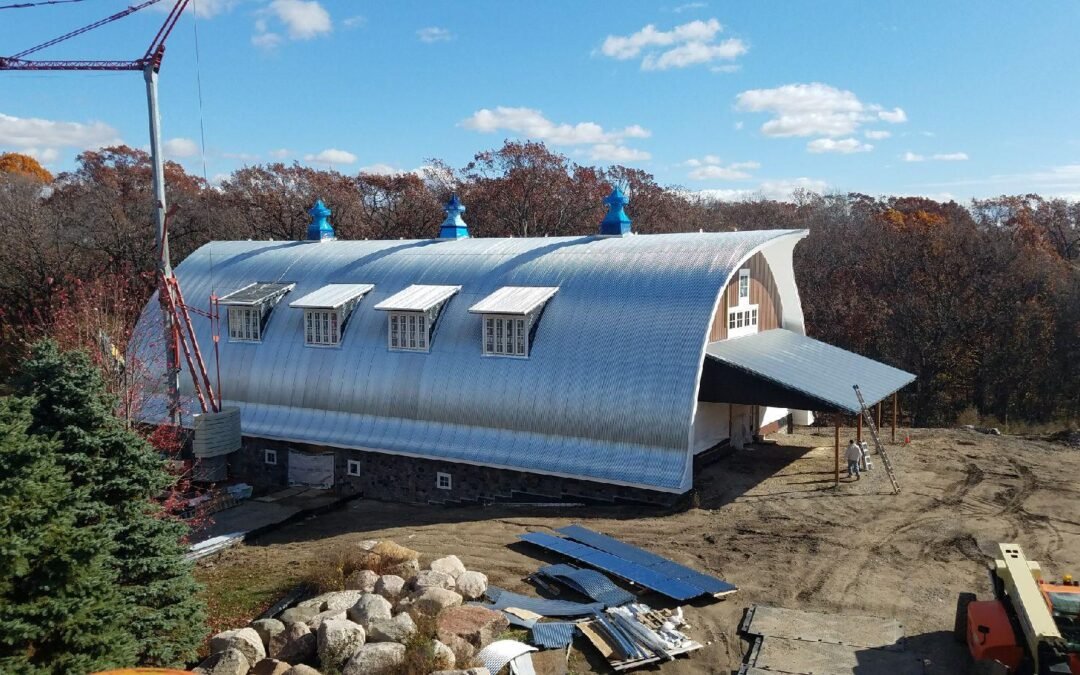
A Complete Guide For Agricultural Property Owners
Metal barn roofing offer the best protection – not just for the barn itself – for your equipment worth hundreds of thousands, feed, hay and grain that can’t get wet. Plus, your peace of mind. But without a metal roof you run the risk of your farm slowly losing quality over time.
Maybe you’re a dairy farmer checking the morning chores — and you notice it again. The drip that’s getting worse, the ugly warped boards and shingles that start curling up, or the rising summer heat inside the barn as you ask yourself, “Do I need to repair this roof… or is it finally time to replace it?”
This blog will break down everything farmers need to know about metal barn roofing, from durability and cost savings to materials, installation, and long-term value. By the end, you’ll know exactly whether metal roofing is right for your operation — and why so many farmers are making the switch.
Looking For Something In Particular?
- What Is Metal Barn Roofing? A Quick Breakdown for Farmers
- Why Your Barn Needs A Metal Roof (It’s More Than Just Looks)
- The Big Problem With Traditional Barn Roofing (And How Metal Fixes It)
- Cost of Metal Barn Roofing
- Signs Your Barn Needs a Metal Roof Replacement
- The Best Metal Barn Roofing Options
- Give Your Farm the Long-Term Protection It Deserves
What Is Metal Barn Roofing? A Quick Breakdown for Farmers
Metal barn roofing refers to steel or aluminum roofing panels engineered specifically for agricultural buildings. Unlike traditional shingles or aging barn boards, metal roofing is built for:
- Heavy weather
- High winds
- Long-term wear (up to 70+ years)
- Fire resistance
- Rodent and pest protection
Most farmers choose standing seam metal roofing. But exposed fastener (agricultural panel) is a great budget-friendly option which we have available for our clients. But don’t worry, we’ll break down the different types of metal barn roofing later on in the blog.
Why Your Barn Needs A Metal Roof (It’s More Than Just Looks)
Metal roofing isn’t just a nicer-looking upgrade — it’s a better long-term investment that protects your farm and lowers your operational costs.
Here’s what makes it so popular in agricultural communities:
1. Extreme Durability & Weather Resistance
Metal roofs withstand:
- Wind speeds up to 120 mph+
- Heavy snow accumulation
- Hail impact
- Torrential rain
- Extreme heat and cold cycles
For farmers in climates with volatile weather, durability isn’t optional, it’s mandatory.
2. Protects Machinery, Feed, and Livestock
A single leak in a feed barn can spoil thousands of dollars in hay. A weak roof in a livestock barn can lead to damp bedding, respiratory issues, and health problems for your livestock. Not to mention the stable, dry conditions that machinery sheds need.
Metal roofing provides water-tight protection, better internal climate control, and healthier livestock environments. It’s an investment with a direct impact on your bottom line.
3. Long Lifespan (40–70+ Years)
Shingle roofs last 15–25 years. Metal roofs? Up to 70 years or more.
That means fewer replacements, repairs, and more money saved on your investment compared to a traditional roof that might be cheaper upfront but you end up paying even more for maintenance and repairs. It’s one of the few upgrades that pays for itself over time.
4. Energy Efficiency That Benefits Your Entire Operation
Metal roofs reflect heat rather than absorb it. That means:
- Barns stay cooler in summer
- Livestock stress decreases
- Thousands of dollars saved over time when the utility bills drop
- Stored feed remains protected and unspoiled
With energy costs rising, this matters more than ever.
5. Low Maintenance (Compared to Traditional Roofing)
Metal roofs require only occasional checks and cleaning. No need for:
- Patching
- Shingle replacement
- Rot treatment
- Mold removal
- Structural repairs from moisture damage
That means less time fixing things and more time running your farm.
6. Fire Resistance — Critical for Hay Barns
Hay barns are vulnerable to spontaneous combustion and ignition from equipment. Metal roofing is naturally fire and spark-resistant, making it safe for high-heat operations (a big help in the summer).
Farm insurance companies often prefer (and sometimes discount) metal roofs for this reason.
7. Increases Property Value
Buyers love metal roofs because it’s low maintenance, it’ll last until you retire (and possibly longer), and it offers much more protection and durability than non-metal barn roofing. If you’re selling your property one day, you’ll get increased resale value and make your property easier to insure.
The Problems With Traditional Barn Roofing (And How Metal Fixes It)
If you’ve owned your barn for a while, you already know the problems traditional roofing creates — especially in areas with heavy storms, high humidity, freezing winters, or strong winds causing a huge disaster on the farm.
1. Traditional Roofing Fails Fast Under Harsh Weather
Farm roofs don’t get city treatment. They face strong winds that lift shingles, overwhelming snow and ice loads, UV damage that dries out shingles and turns your roof into a broken shield.
Even less extreme conditions like hail can break or puncture traditional barn roofing, or heavy rain that finds weak spots to jab with every storm. A single storm can expose your barn — and everything inside it — to water damage or rot, if you use traditional barn roofing.
Metal roofing solves this with superior weather resistance. Steel or aluminum panels don’t warp, curl, or crack. They shed snow easily and lock tightly to resist wind uplift.
2. Wood and Shingle Roofs Attract Pests
Shingles and old barn boards are prime targets for:
- Birds
- Rodents
- Raccoons
- Bats
- Insects
These pests create holes, chew through the material, and damage insulation or wiring — all of which compromise livestock safety and building integrity. Metal roofing eliminates nearly all pest entry points. Pests can lift real steel!
3. Rising Maintenance Costs That Cut Into Your Farm’s Profit
Farmers often spend thousands each year repairing traditional roofs. Once they see:
- Patching holes
- Replacing damaged shingles
- Fixing leaks
- Repairing water-damaged trusses
- Replacing rotten decking
…They have to call someone to fix it.
Metal roofs on the other hand need minimal upkeep and rarely experience costly failures. Plus they’re protected by warranties.
Cost of Metal Barn Roofing
If you’re thinking about getting metal barn roofing, you’re now probably wondering about the costs. While prices vary based on region, material, and labor, here’s a general estimate:
- Exposed Fastener Metal Roofing: $5–$8 per sq. ft. installed
- Standing Seam Metal Roofing: $10–$16 per sq. ft. installed
- Corrugated Steel: $6–$10 per sq. ft. installed
However, there are a lot more factors that affect cost:
- Roof size
- Roof pitch
- Demolition of old materials
- Insulation requirements
- Custom fabrication
- Material choice
- Local labor rates
This is how roofers determine your estimate. And although metal roofing costs more upfront, it saves you significantly more over 30–50 years due to fewer repairs and replacements. We can’t hammer this point down enough.
Signs Your Barn Needs a Metal Roof Replacement
You may not need a full replacement just yet — but if you start to notice these on your barn, here’s when metal becomes the better choice:
- Leaks or water stains inside the barn
- Sagging roof sections
- Curling or missing shingles
- Mold or rot inside the structure
- Daylight visible from inside the barn
- Rising summer temperatures inside
- Rusted or warped panels
- Pests getting inside the roofline
If you’re seeing any of these, your current roof is probably close to dead. It’s better to notice them now, then later, though.
Now it’s time to get you something better.
The Best Metal Barn Roofing Options
What’s the best metal roof for your barn? Choosing the right roof for your barn or agricultural building isn’t just about picking the cheapest material. Farmers have to think about weather resistance, long-term maintenance, livestock safety, feed protection, and how the barn will look on the property.
Here’s a breakdown of the five most reliable barn roofing options, including how they compare in cost, durability, and appearance — and which one makes the most sense for your farm.
1. Ag Panel (Exposed Fastener) Metal Roofing
The most popular barn roofing material in America — affordable, strong, and dependable.
Overview
Ag panel roofing uses ribbed metal sheets secured with exposed screws and neoprene washers. It’s simple, durable, and widely used on farms due to affordability and ease of installation.
Cost
- Most budget-friendly metal roofing option
- Lower material cost and quicker installation
- Great choice for large barns or multi-building properties
Durability
- Lasts 25–40 years
- Performs extremely well in rain, snow, hail, and wind
- Only major maintenance issue is fasteners loosening or washers wearing out, which can be serviced
Aesthetics
- Classic “farm barn” appearance
- Clean, functional, agricultural look
- Available in many colors
Best For: Hay barns, machinery sheds, grain storage, cold barns, large outbuildings.
2. Standing Seam (Concealed Fastener) Metal Roofing
Premium protection with unmatched longevity. Ideal for high-value farm buildings.
Overview
Standing seam features interlocking metal panels with no exposed screws — all fasteners are concealed. This dramatically reduces leak risk and creates a sleek, modern look.
Cost
- More expensive than ag panel
- Higher labor cost due to precise installation
- Worth it for buildings that need maximum protection
Durability
- Often lasts 40–70+ years
- Superior weather and leak resistance
- Great for barns where moisture control is critical (e.g., dairy, livestock, feed storage)
- Minimal long-term maintenance
Aesthetics
- High-end architectural look
- Clean vertical lines
- Looks excellent near custom homes or visible areas of the property
Best For: Livestock barns, heated shops, event barns, farm offices, high-visibility buildings.
3. Shake Roofing
Gives barns a rustic, traditional look — without the high maintenance of real wood.
Overview
Shake roofing mimics the appearance of hand-split wood shakes but is made from more durable materials (metal shake, composite shake, or engineered shake). It’s popular for barns that double as event spaces or have historic or rustic styling.
Cost
- Mid–high price range
- More than basic shingles or ag panel
- Often less expensive than tile or premium standing seam
Durability
- Better longevity and weather resistance compared to natural wood shakes
- Typically lasts 30–50 years depending on material
- Resistant to rot, insects, and warping
- Requires less upkeep than wood, but more than metal
Aesthetics
- Beautiful rustic, hand-split texture
- High curb appeal
- Great for farms wanting a traditional or lodge-like appearance
Best For: Event barns, farm storefronts, agritourism buildings, barns close to homes, rural estates.
4. Shingle Roofing
Traditional and economical — but not as long-lasting as metal.
Overview
Asphalt shingles are the most common residential roofing material and are sometimes used on smaller barns, garages, or outbuildings where budget is the primary factor.
Cost
- Least expensive overall
- Low material cost, simple installation
- Good choice for small structures, not ideal for large spans
Durability
- Lifespan of 15–25 years
- More vulnerable to wind, hail, moisture, and temperature swings
- Requires more frequent repairs
- Not as strong as metal for barns storing equipment, hay, or livestock
Aesthetics
- Familiar, traditional appearance
- Available in various colors
- Matches many farmhouses
Best For: Garages, small outbuildings, pump houses, hobby barns — not ideal for main barns or storage.
5. Tile Roofing
The premium, high-end option with a distinctive architectural look.
Overview
Tile roofs (clay, concrete, or composite) are extremely durable and visually striking. While less common on barns, they are used on estate-style farm properties or buildings where style is as important as function.
Cost
- Highest up-front cost of all options
- Heavier material requires stronger roof framing
- Often used for select structures rather than full farm operations
Durability
- Lifespans of 50–100 years
- Excellent fire resistance
- Very strong against heat and sun exposure
- Heavy weight increases wind resistance but requires reinforced support
Aesthetics
- Luxury, architectural appearance
- Distinctive European or Southwestern look
- Pairs well with upscale homes or event properties
Best For: High-end farmhouses, show barns, guest houses, or specialty buildings.
Metal Barn Roofing Comparison Chart
| Roofing Type | Cost | Lifespan | Maintenance | Aesthetic Style | Best For |
| Ag Panel Metal | $ | 25–40 yrs | Low | Classic Farm | Large barns, sheds |
| Standing Seam | $$–$$$ | 40–70+ yrs | Very Low | Modern/High-End | Livestock & high-value barns |
| Shake Roofing | $$–$$$ | 30–50 yrs | Medium | Rustic/Traditional | Event barns, agritourism |
| Shingle Roofing | $ | 15–25 yrs | Medium–High | Traditional | Small structures |
| Tile Roofing | $$$ | 50–100 yrs | Low | Luxury/Architectural | Estate properties |
Give Your Farm the Long-Term Protection It Deserves
Your barn, shed, or livestock building is the cornerstone of your entire operation. When it’s protected with metal barn roofing, your equipment lasts longer. Your animals stay healthier. Your feed stays dry. And your farm stays productive.
A metal roof gives your barn the protection it needs. The Long-term savings, better energy efficiency, fewer repairs, and peace of mind are just an awesome bonus. You depend on your farm every day. Now give it a roof that can return the favor.
Whether you’re weighing your options or already know metal roofing is the right move, our team in Minnesota is here to help. We install durable, farm-ready metal roofing systems built to last — protecting your equipment, livestock, and livelihood for decades.
When you’re ready to protect your farm…